Roger Fenton
1819–1869 · English · Wet collodionN° 03 · 3 of 5
Roger Fenton (1819–1869) was an English photographer whose career lasted eleven years and made him the most famous photographer in Britain. He founded the Photographic Society, became the first official photographer of the British Museum, and in 1855 made more than 350 photographs of the Crimean War, among the first war photographs ever taken. In 1862 he sold his equipment and went back to the law.
- Full name
- Roger Fenton
- Born / died
- 28 March 1819, Crimble Hall, Lancashire, England; 8 August 1869, Potters Bar, England
- Nationality
- English
- Genre / movement
- Landscape, architecture, portraiture and early war photography
- Active
- 1851–1862
- Known for
- The Crimean War photographs of 1855; the first official photographer of the British Museum; a founder of the Photographic Society
- Format / process
- Waxed paper negatives in 1852, then wet collodion glass negatives; salted paper and albumen prints
Who was Roger Fenton?
Roger Fenton came to photography late and left it early. He was born on 28 March 1819 at Crimble Hall in Lancashire, north of Manchester, the grandson of a wealthy cotton manufacturer and banker. His father John was a banker and a member of parliament. Fenton took a degree at the University of London in 1840 and read law, then put the law aside in the early 1840s to study painting in Paris and London. His paintings were shown at the Royal Academy from 1849 to 1851.
The Great Exhibition of 1851 in London drew him to photography. He went to Paris to learn Gustave Le Gray’s waxed-paper process, and by 1852 he had prints on show in Britain. That September he travelled to Kiev to photograph a suspension bridge that the engineer Charles Blacker Vignoles was building over the Dnieper for Czar Nicholas I. He also photographed the Kremlin and the Cathedral of the Assumption in Moscow, famous buildings that few photographers had recorded.
He was an organiser as much as a photographer. In 1852 he and the photographer Antoine Claudet published a proposal for a photographic society. In 1853 he became a founder and the first secretary of the Photographic Society of London, later the Royal Photographic Society, and Queen Victoria and Prince Albert became its patrons. The same year the British Museum hired him as its first official photographer. He built a studio on the museum’s roof, and by May 1856 he and his assistants had made more than eight thousand prints for the museum.
In February 1855 he sailed for the Crimea, where Britain, France and Turkey were at war with Russia. The publisher Thomas Agnew & Sons backed the trip, and Prince Albert gave him letters of introduction, which gave him access to the British, French and Turkish commanders. He took more than thirty crates of materials, an assistant named Marcus Sparling, and a wine merchant’s van fitted out as a darkroom. He worked in the Crimea from March to June and made more than 350 photographs.
The prints sold less well than he had hoped. Even so, 312 of them were shown in London, and Fenton showed them to Queen Victoria and Prince Albert and to Napoleon III in Paris. He spent the following years on landscapes, abbeys, cathedrals, country houses and portraits of the royal family. In 1858 he made fifty studio pictures of imagined life in the Near East, now called his Orientalist studies.
In October 1862 he announced his retirement from photography, and in November he sold all his equipment and negatives at auction. He said he wanted to remove “all that might be a temptation to revert to past occupations.” He returned to the law and died at Potters Bar on 8 August 1869, aged fifty.
What is Roger Fenton’s signature style?
Fenton photographed like a painter who had learned photography. His pictures are calm and carefully arranged, and he often put a small figure in the frame to give a sense of scale and to stand in for the viewer. In architecture he liked distant views that set a building in its landscape, and closer ones that picked out pattern and detail.
Because the camera flattens space, he built many compositions on shape and pattern. In Scotland in 1856 he experimented with light, atmosphere and the space of the picture. He often turned what looked like a limit of the camera or the materials into something the picture could use.
His materials changed quickly. In Russia in 1852 he used Le Gray’s waxed paper negatives. By the Crimea he worked with wet collodion on glass, which has to be coated, exposed and developed while the plate is still wet, and that is why he needed a darkroom on wheels. He printed on salted paper and on albumen paper.
In the Crimea, slow materials and heavy equipment limited him to subjects that stood still: portraits of commanders, camp life, harbours and landscapes. He never photographed the dead or the misery of the trenches. He wanted a portfolio that would sell, and one that supported the belief that British soldiers had died with dignity in a noble cause.
The British Museum taught him to light objects with daylight alone, working on the roof and shielding the lens from direct sun with a curtained box. He used those lessons in the still lifes he made in 1860.
Roger Fenton’s most notable works and series
Roger Fenton’s best-known photographs come from five strands of his work: the Russian trip of 1852, the British Museum studies, the Crimean War, the Welsh landscapes of 1857, and the still lifes of 1860.
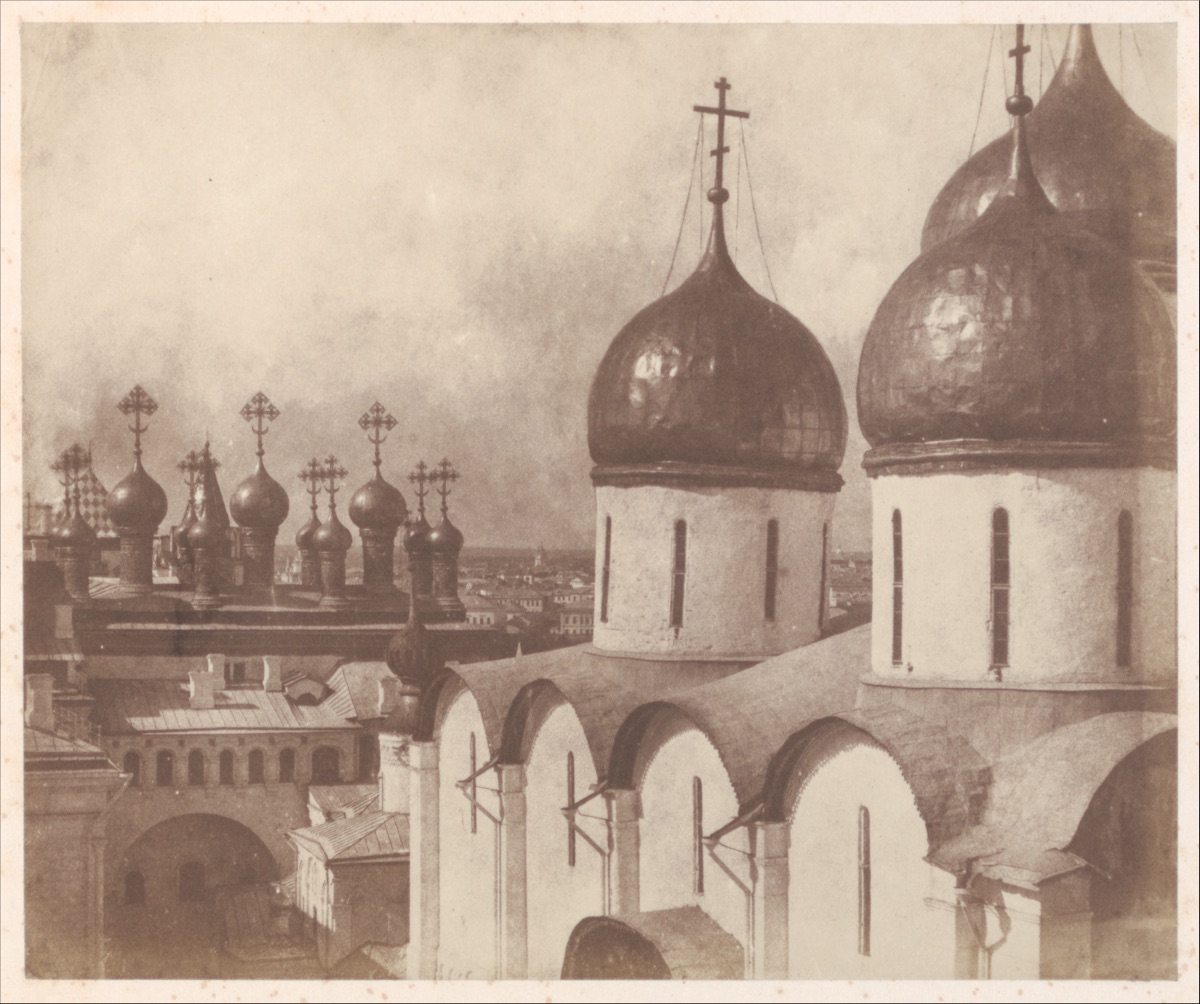
Moscow, Domes of Churches in the Kremlin (1852)
Fenton made this view in Moscow on his Russian trip, from a waxed paper negative. Few photographs existed of Russia’s best-known buildings. He took the onion domes of the Kremlin from an unusual point of view, so that they read as a pattern of shapes against the sky.
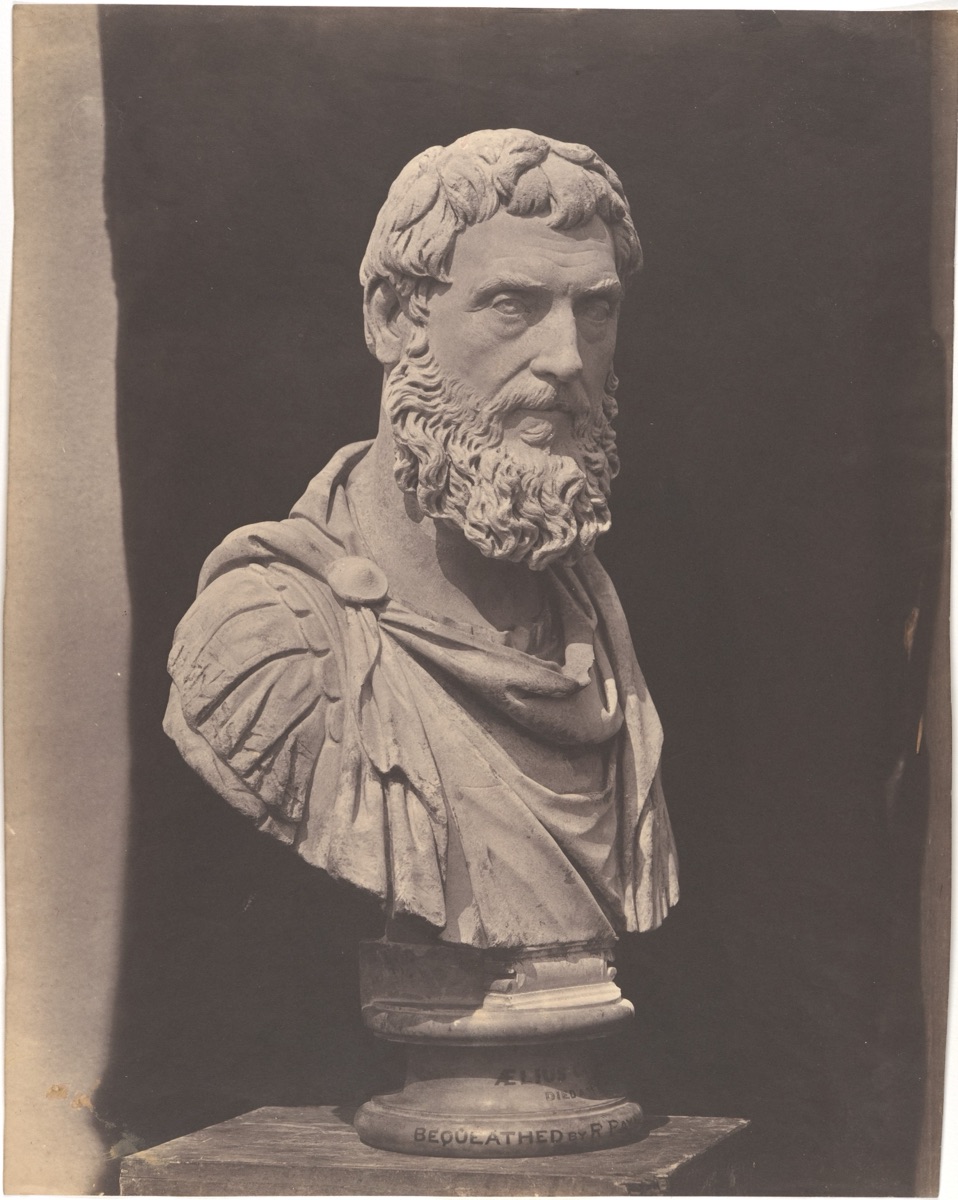
The British Museum: Aelius Caesar (1854–1858)
From 1853 Fenton photographed the British Museum’s collection: sculpture, fossils, skeletons, manuscripts and Assyrian tablets. Daylight was his only light, so objects were carried to the roof, and he dusted some of them with chalk to cut reflections. The work was unpaid, but he was allowed to sell the prints, and he eventually opened a shop at the museum entrance. This study of a sculpted bust, titled Aelius Caesar, dates from the years of his museum work.
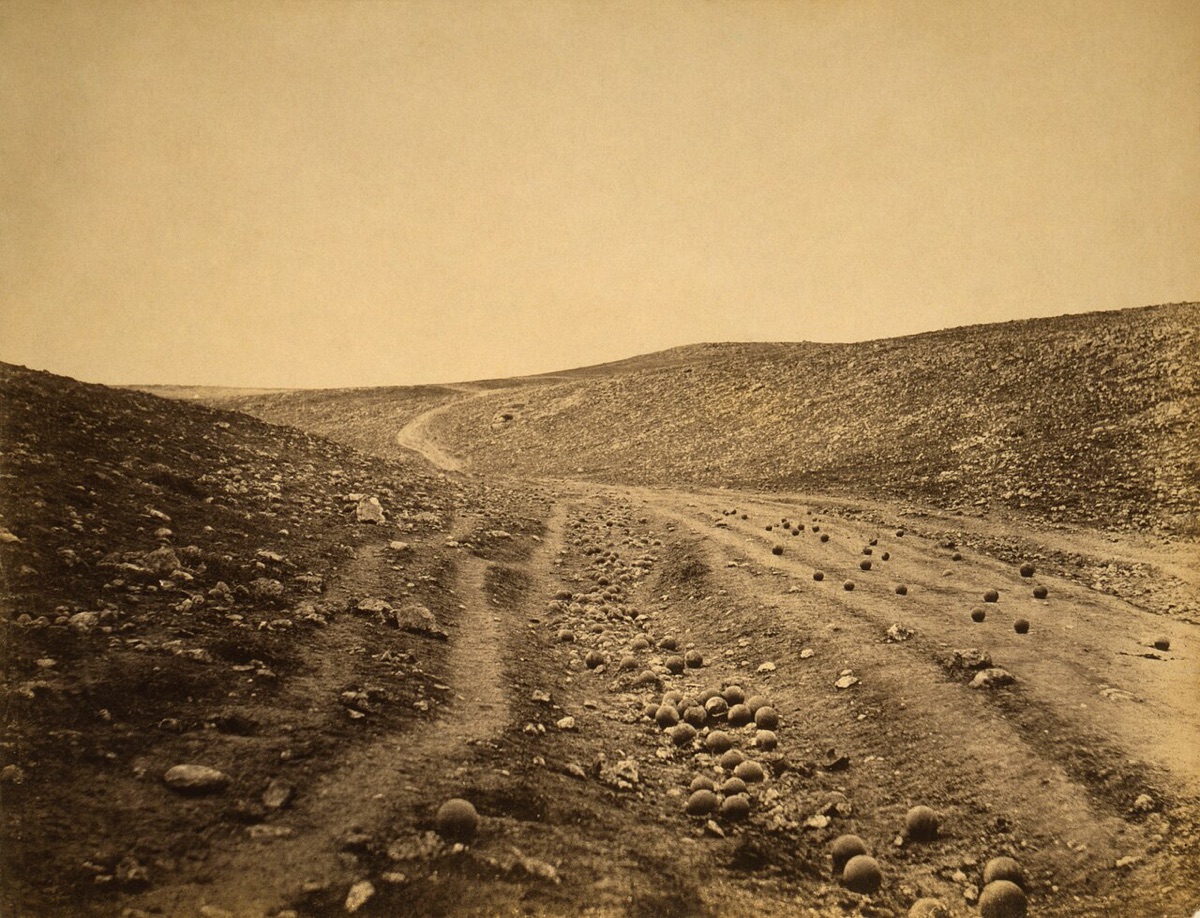
The Valley of the Shadow of Death (1855)
On 23 April 1855 Fenton photographed a rutted road in a ravine near Sebastopol. He made two exposures, one with the road empty and one with cannonballs scattered over it. The version with cannonballs is the famous one. In 2007 the filmmaker Errol Morris went to the site and found evidence that the empty-road picture was taken first. He could not say why the cannonballs appear in the second. Fenton may have placed them there to strengthen the image, or soldiers collecting them for reuse may have thrown them down. Agnew showed the photograph in London in September 1855, one of eleven prints in a set called Panorama of the Plateau of Sebastopol, under a title that recalls Psalm 23.
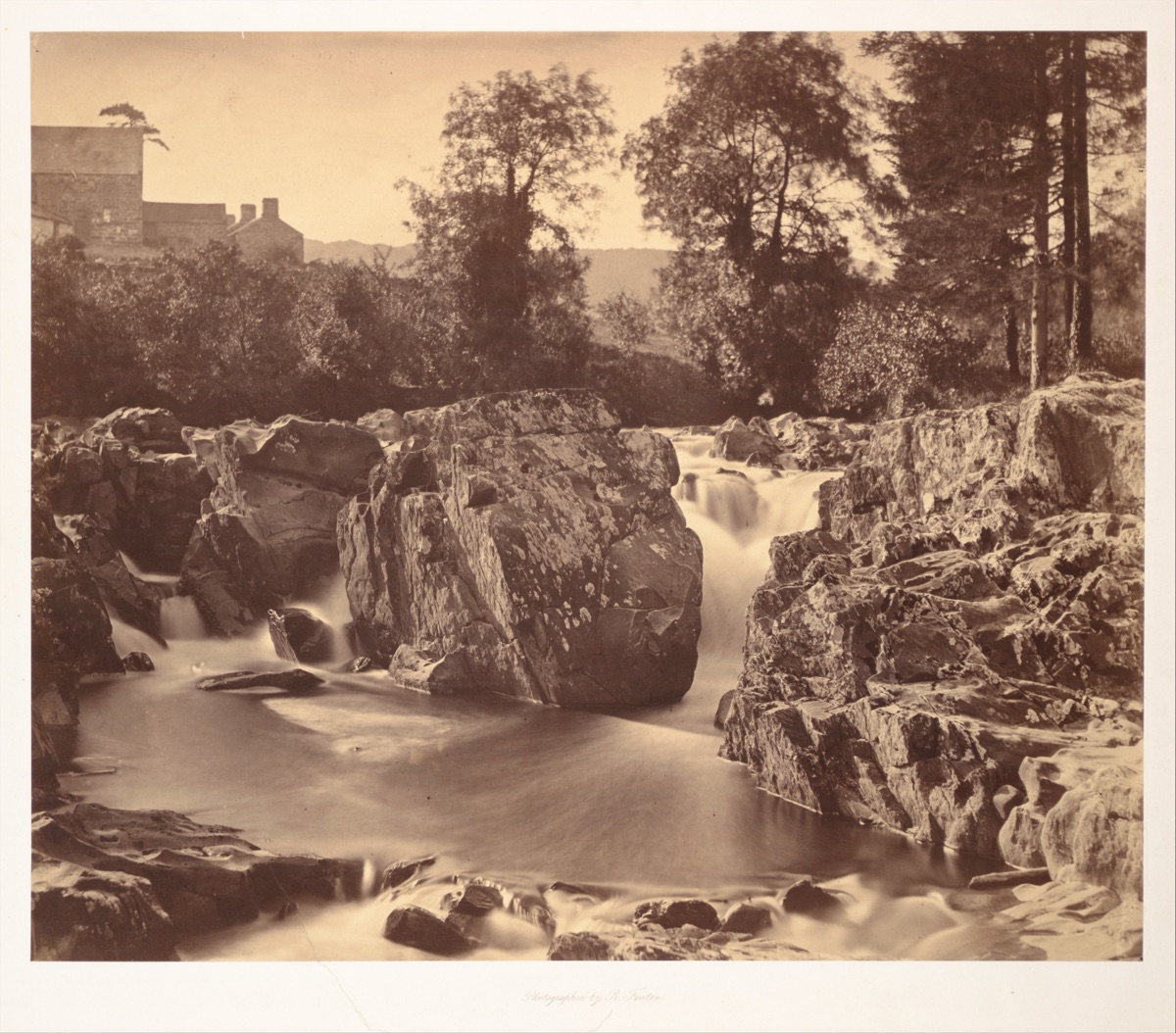
Falls of the Llugwy, at Pont-y-Pair (1857)
In 1857 Fenton travelled to the valleys of the Conway, the Lledr and the Llugwy in Wales. Rocky streams, wooded hollows and mountains inspired some of his finest landscape photographs, according to the National Gallery of Art. In this view of the Llugwy the moving water is soft against the hard, broken rock. Elsewhere in Wales he photographed the old Pont-y-Pant bridge and left out the new iron suspension bridges.
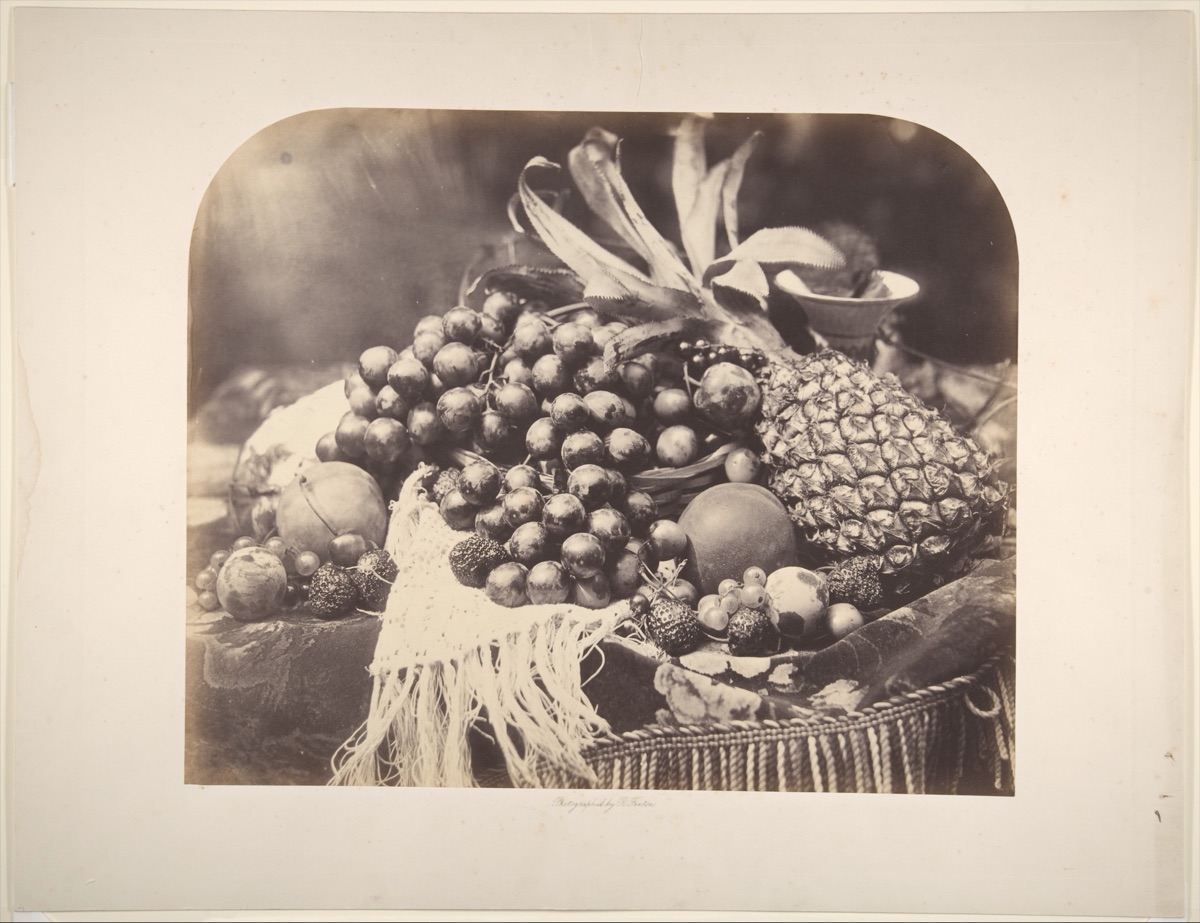
Still lifes (1860)
In the summer of 1860 Fenton made more than forty still lifes, detailed studies of objects in dense arrangements. They often include exotic fruit and flowers, such as pineapples imported from the Caribbean. Still life was popular in British painting and almost new to photography.
Why should you care about Roger Fenton?
Fenton’s Crimean photographs show what a war photograph could and could not be in 1855. The equipment forced him to photograph things that stood still, and he chose to leave out the dead. Whether he moved cannonballs onto a road is still argued, and that argument is part of how the Valley of the Shadow of Death is read today.
He also helped build the profession. The Photographic Society he founded in 1853 became the Royal Photographic Society, which created its Fenton Medal in 1980 for members who have given extraordinary service to the Society.
He stopped when the trade changed around him. By the early 1860s small, cheap photographs had flooded the market and prices had fallen, a son had died, and the family mill had closed. The National Gallery of Art reads his retirement as most likely personal and professional. He was almost forgotten by the time he died in 1869.
Art historians took him up again later. In 2004 and 2005 the exhibition All the Mighty World: The Photographs of Roger Fenton, 1852–1860 was shown at the National Gallery of Art in Washington, the J. Paul Getty Museum, the Metropolitan Museum of Art and Tate Britain, with a catalogue by Gordon Baldwin, Malcolm Daniel and Sarah Greenough. He was inducted into the International Photography Hall of Fame in 2007.
Fenton is the photographer I find hardest to pin down. The Crimean pictures made his name, but the one I would hang on a wall is the Falls of the Llugwy: dark rock, soft water, nothing happening. I make long exposures of water and sky myself, and I recognise the patience in that picture.
Where I part ways with him is the Valley of the Shadow of Death. I understand leaving out the dead, since his sponsors wanted a portfolio that would sell. Placing cannonballs on a road is another matter, if that is what happened. A picture that has been arranged asks the viewer to trust whoever arranged it, and I would rather say what I changed.
What I admire most is the ending. He sold the cameras and the negatives so that nothing would tempt him back.